Welcome to part 2 of my off-season blog series. We are nearing the end of the sign-up phase for the new managers and things are ticking along rapidly behind the scenes. It is also great to see a lot of rumours cropping up in team HQ threads as teams prepare for the 2014 season, many of them in a new division for the first time.
This week I bring another three articles to you:
Rider Efficiency in the PT - I compare how strong the top 50 riders in the PT rankings are with how high their wage is - the best riders may surprise you.
Transfer Season Preview Part 2 - More Free Agents - I look at the remaining PCT teams who I did not cover last time.
A Look back at History - Dauphine Libere 2007 - A look at a race from the very first season of the Man Game.
It is a common thing in the Man Game to try to make the perfect balance between a strong rider and a cheap rider – getting great value for money is absolutely everything. Sometimes we talk about overpaying team leaders, even when these are incredibly strong leaders. What I have done below is look at how efficient each rider in the top 50 of the PT rankings is.
To determine efficiency I took the points that each rider scored during the season then divided it by their wage/10000. For example a rider with 50,000 as their wage would have their score divided by 5. This would provide a great way of determining who the best bargains in the division are. I have only done it with the top 50 in the rankings because below that level it becomes more problematic with some riders who managed to win stage races thanks to a breakaway suddenly looking like better bargains than they actually are.
So here are the rankings:
Eff
Actual
Name
Points
Wage
Points/10k
1
28
Óscar
Guerao
1057
€110,000
96.09
2
37
Dimitri
Claeys
820
€140,000
58.57
3
14
Ben
Swift
1571
€ 310,000
50.68
4
27
Michael
Van Stayen
1072
€240,000
44.67
5
3
Edvald Boasson
Hagen
2333
€ 540,000
43.20
6
10
Daniele
Bennati
1872
€ 435,000
43.03
7
1
Taylor
Phinney
2877
€700,000
41.10
8
45
Cesare
Di Maggio
688
€175,000
39.31
9
13
Tejay
Van Garderen
1577
€410,000
38.46
10
15
Tiago
Machado
1547
€ 450,000
34.38
11
30
Danny
Summerhill
994
€290,000
34.28
12
9
Justo
Tenorio
1877
€550,000
34.13
13
33
Robin
van der Hugenhaben
916
€286,000
32.03
14
4
Sam
Bewley
2327
€750,000
31.03
15
6
Yuri
Trofimov
2204
€720,000
30.61
16
46
Nico
Keinath
672
€ 225,000
29.87
17
19
Simone
Ponzi
1506
€ 510,000
29.53
18
8
Fabian
Cancellara
2105
€780,000
26.99
19
2
Tom
Boonen
2670
€ 1,000,000
26.70
20
17
Andrei
Amador
1523
€ 575,000
26.49
21
22
Stefan
Schumacher
1451
€570,000
25.46
22
44
Walter
Pedraza
706
€280,000
25.21
23
24
Jurgen
Van den Broeck
1263
€ 515,000
24.52
24
16
Jan
Bakelants
1533
€705,000
21.74
25
35
Diego
Ulissi
869
€400,000
21.73
26
20
Filippo
Pozzato
1505
€700,000
21.50
27
11
Robert
Gesink
1668
€800,000
20.85
28
49
Dan
Holloway
633
€ 315,500
20.06
29
31
Jerome
Coppel
943
€ 475,000
19.85
30
50
Alessandro
Ballan
631
€320,000
19.72
31
23
Alberto
Contador
1315
€700,000
18.79
32
7
Angel
Madrazo
2159
€1,180,000
18.30
33
12
Aleksandr
Pluchkin
1585
€ 875,000
18.11
34
41
Daniel
Martin
742
€ 415,000
17.88
35
5
Damiano
Cunego
2288
€ 1,300,000
17.60
36
34
Philippe
Gilbert
907
€520,000
17.44
37
36
Luis Leon
Sanchez Gil
839
€528,500
15.88
38
42
Romain
Sicard
741
€ 475,000
15.60
39
32
Marcus
Burghardt
935
€610,000
15.33
40
18
Andy
Schleck
1520
€ 1,000,000
15.20
41
26
Frank
Schleck
1243
€ 840,000
14.80
42
38
Rigoberto
Úran
806
€ 590,000
13.66
43
25
Vincenzo
Nibali
1254
€ 950,000
13.20
44
21
Simon
Spilak
1470
€ 1,200,000
12.25
45
40
Markus
Fothen
756
€630,000
12.00
46
29
Janez
Brajkovic
1049
€ 900,000
11.66
47
39
Stefan
Denifl
756
€685,000
11.04
48
48
Beñat
Intxausti
635
€ 600,000
10.58
49
47
Emanuele
Sella
668
€850,000
7.86
50
43
Riccardo
Ricco
734
€1,050,000
6.99
A few things jump out here. Firstly, it is amazing to see just how many sprinters are near the top of this ranking – Guerao, Swift, Van Stayen and Bennati all provided fantastic value to their teams this year! This meant that their teams could all put money into other parts of their line-up, usually another leader but in the case of Puma an amazing youth set-up.
Secondly, Claeys and Di Maggio were certainly worth the risks that they represent to their teams – both are strong primarily in one stat and this clearly paid off. If we look at the other riders in the top 10 – all of whom are much more established and famous riders in the MG – it is worth noting that all 4 of them received some training in the off season. This, I believe, is the key to achieving an efficient rider. A rider who gets to keep their old wage but achieve new stats is always going to achieve much more valuable results and these are the statistics to prove it. It is worth noting that Guerao in particular is proof of this as 3.2 million was spent on making him what he now is.
Inside the top 20 we should note the broad range of rider types that are on offer, with the aforementioned sprinters, quite a few GC riders, quite a number of puncheurs and a few cobbled riders (though all of them except Summerhill are proficient in another area too).
Next week I will be looking at the PCT rankings and after that the CT rankings. Let me know what you think of these statistical rankings – I think it is valuable to look at the Man Game this way but others may disagree. Do people find these things interesting?
Transfer Season Preview Part 2 – More Disbanding Teams
Last time we looked at several confirmed disbanding teams, namely Pearl Adidas, Bintang, Hollister and Vespa. Let’s continue the second part of the overview of disbanding teams by going through the remaining Pro Continental teams today. So let’s start off with Sram – Riboxx. The disbanding of this team leaves a large hole in the German market, with their focus very much on that country.
It should first be noted that they don’t have any huge names in their team, as they are very much a squad which focuses on depth of scoring rather than headline names. The first of the leaders in the squad is Fabian Wegmann but he will be 34 next year and in serious decline from his once-great form. Regardless, he will still be the sort of rider who could pull in serious results in a CT squad and probably wouldn’t be going for much due to his age.
Also getting rather long-in-the-tooth is Linus Gerdemann, who is actually a fantastic all-rounder and while he won’t win too many stages he should provide a constant stream of points wherever he ends up. In the CT most of the best climbers can’t TT very well so if he can hold on in the mountains he could indeed surpass some of them and might be able to take out a stage race or two. At the same time he is a two-in-one package as he could also achieve results on hills. Joaquin Rodriguez had great success as this sort of rider at Iberia throughout the season just gone.
The most eye-catching name from this team, however, is surely Heinrich Haussler who combines a strong sprint with a decent ability on hills and also has a huge number of race days to boot. He is certainly capable of being competitive in a PCT squad and you have to wonder whether he would even fit in a PT team, provided he is placed in the right races. It will be interesting to see where he ends up because it seems that there won’t be too many top-notch sprinters in the free agency this coming season. If Haussler gets too expensive then Luka Mezgec could be a good second option for many teams.
Next up we have Team WWE. There is a certain American on this team who some may remember – one Joseph Dombrowski. He cost WWE $666,000 as a neo-pro and it is hard to imagine just how high that number will go now that he has some training under his belt. Not only is he going to turn into a potential GT winner one day but he is already going to be at a level where he can provide a constant stream of points regardless of which division he is racing in. Surely a PT team which is confident of staying up will do everything to get him... but how much will he cost?
Due to all the money spent on Dombrowski there are in fact very few other major riders in this team. Franco Pellizotti, Frederik Kessiakoff and Mauricio Ardila will struggle to be competitive above CT level next season and in fact the same can be said for most of the domestiques, as most of them are in their 30s. There are still a couple of bright points, though. Andre Greipel is one of them and, while he probably isn’t capable of winning stages in the PT, he certainly proved throughout the last two seasons that he is perfect for this level. Not only that but he may go a bit cheaper because he will be 32 at the start of the next season – his final year with these stats.
Amets Txurruka could be of any team looking for an extremely discount leader who may well be able to pick up mountain jerseys with his high fighter stat. Michael Vingerling will find a home in a CT squad for sure, where he could pick up a win or two. Ultimately, however, most of these riders will just be picked up as domestiques in PCT or CT squads or left without a contract.
I have to admit that airBaltic was one of my favourite teams at the start of the season – it is completely unlike any other squad in the game with a mix of various Baltic nations and a few British riders thrown into the mix. The top two names in the squad are both sprinters. Firstly there is Mark Cavendish who is very fast and has ridden successfully at PT level in the past. He is still young enough to be trained as well, so his relatively poor hill stat could be improved if someone is willing to put the money into it. His current wage of close to half a million dollars will deter some, however, as spending that much on a sprinter is a huge risk. Still, someone like Pendleton’s may be interested as he would fit their team quite well.
Tomas Vaitkus is the other sprinter on this team and, though he isn’t as fast as Cavendish, he is still quick enough to win at a lower level. The question is whether a CT team would be willing to risk his relatively low number of race days for the possibility of the high return he could provide. Another interesting possibility would be to have him as a great lead-out rider for a top sprinter, similar to the role Gasparotto played this season at Puma. Mitch Docker was the team’s third choice sprinter and it is hard to see Oz Cycling turning down an opportunity to bring him in, as he is still capable of winning races.
There are a few other notably riders here. Trent Rowe can provide good backup at pretty much every level and is the useful sort of mountain domestique who can also contribute to TTTs and still provide his own okay GC results. Ignas Konovalovas will undoubtedly be much sought-after by teams at both PCT and CT level. Particularly CT teams who paid close attention to what Westra was capable of at Gazelle. Of course his wage will probably be a bit higher than Westra’s was so it may be a bit of a trade-off.
There are a number of very interesting riders at Pivovarna Lasko, some of whom will no doubt command a high price. Hassen Ben Nasser is the first noteworthy name here. He was the subject of a last-minute bidding war from a number of managers who were desperately seeking out a hilly leader last season and so his wage at the moment, over half a million, will surely be lower this time around. Don’t expect it to be much lower, however, because he is in fact a strong sprinter for a puncheur at this sort of level.
Stijn Devolder, the former Tour De France winner, is once more in the free agency and you have to think that someone will take pity on him just to say that they have a TDF winner in their squad. I’m sure he would be a decent domestique at either CT or PCT level. Please someone give him a job. Less likely to struggle for work is Yauheni Hutarovich who should provide a decent sprint option for a team who is not focussing on that discipline. His hilly ability leaves something to be desired but there is no doubting his sprint.
Much more interesting on the sprint front are Grega Bole and, particularly, Marko Kump. Kump will develop into a great sprinter/puncheur this season and will surely be capable of taking results from greatly reduced packs. I could certainly see his wage just growing higher this year, over the 400,000 mark. Bole, on the other hand, would be a great lead-out option who could also ride for his own chance on those same tough stages.
The final disbanding team is LukOil-Rostelekom and, quite honestly, it is probably the least interesting of those who are mentioned here. The team’s roster seems to mostly be whatever Russian scraps Tinkoff left them. Their three leaders will all be decreasing before the next season, but nevertheless, let’s have a look at them. Vladimir Karpets will certainly still be a capable points-scorer after this season, particularly if there is a TT in a mountainous stage race. His support stats should still be good enough to allow him to at least hold on in all but the toughest stages but he is going to struggle on the really big climbs and also on the hills.
Vladimir Efimkin and Maxim Iglinski can be dealt with together. Both of them will be in their first year of decline, so it won’t be a drastic difference. They should still be at least quite competitive at a PCT level and certainly a top rider at a CT level but both of them will lack TT ability and are also going to struggle on punchier climbs. If they can avoid these terrains, however, they will surely be serious threats.
So with that we have now covered one of the PT teams and all of the PCT squads. Next time we will cover all of the confirmed disbanding CT teams as well as the recently-announced disbandment of Koenigsegg.
The Dauphine Libere of 2007 was a classic stage race in the first season of the Management Game, and it has to be said it had a bit of everything. The race started off with a prologue then there were two slightly bumpy but still flat stages. The first major GC stage was a long and slightly hilly time trial, which was followed by a tough mountain top finish in the 5th stage. The 6th stage was a HC climb with a descent to the finish line, which was then followed by the queen stage – 5 categorised climbs including a summit finish. The race concluded with another rolling stage with a flat finish.
There were a number of big names at this race, so here is a run-down of the favourites:
Damiano Cunego – A man who needs no introduction. He was here right after winning the 2007 Giro d’Italia (a race I may cover in this feature at some point). Alejandro Valverde – He was 4th at Catalunya and had won Liege-Bastogne-Liege. He was certainly going to like the summit finishes. Thomas Dekker – 2nd overall at Paris-Nice earlier in the season. He was a much better time trialist than most of the other favourites here. Levi Leipheimer – 2nd at Pais Vasco, including a win in the final TT. While certainly a great climber Leipheimer’s main strength was the time trial. Christophe Moreau – This was his first stage race of the season. The French stage racer was the big hope of the home fans. Alberto Contador – A young contender for this race and another strong TT rider. 3rd at Pais Vasco. Frank Schleck – Winner of Tirreno-Adriatico and Fleche – Wallonne earlier in the season. He would have preferred a hillier course with less TTing, but he was certain to be a threat.
As said the race kicked off with a short prologue. The gaps weren’t likely to be big but could be a good early indication. David Millar took a strong early lead here which he held on to all day, beating Bradley McGee and Paolo Savoldelli in the process. Amongst the favourites Contador gave himself the psychological advantage by coming in 7th, just 1” faster than Moreau. That said all of the favourites were within 10 seconds of each other so no major blows were struck.
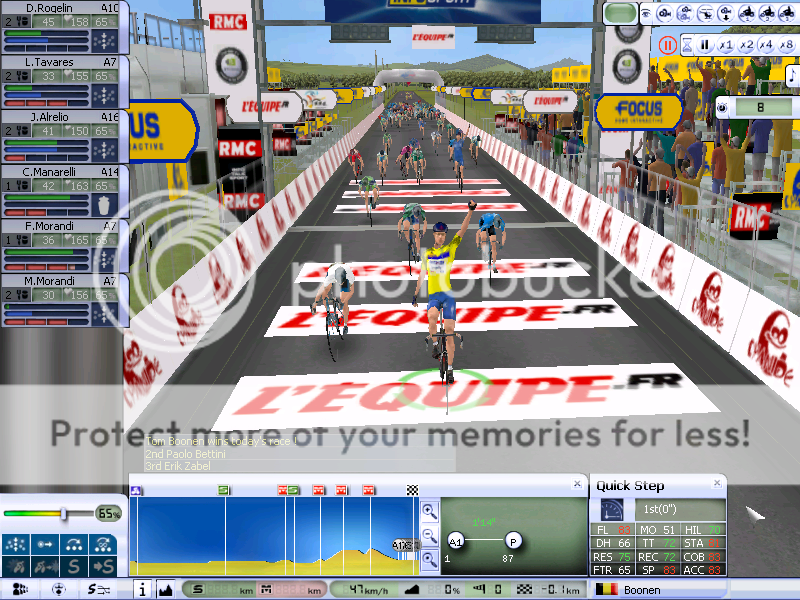
The second stage was slightly hilly but still likely to be a sprint. Boonen’s Quickstep squad did a lot of early work which meant that he was able to take 12 bonus seconds, meaning that a stage win would put him into the overall race lead. He went on to take that stage victory, comfortably beating Zabel and Bennati in the process and putting on the leader’s jersey. The next day was slightly tougher but once again a sprint looked likely. Over the top of the final climb a number of riders were caught out including second overall Millar, but that group made it back. Boonen made it comfortable back-to-back stage wins.
This brought us to stage 4, where we could expect the first indication of which riders would be in contention going into the mountain stages. The favourites were all leaving close to each other so it was quite a wait to see who would win the day. Levi Leipheimer put in an amazing time of 1h00’13” on a very tough course but it was Thomas Dekker who really set the course ablaze – 59’97”. This was the best of the GC favourites but it was Paolo Savoldelli, who had been third in the prologue, who took the stage win.
This put Savoldelli in the leader’s jersey but Dekker was in 2nd overall, 27” back. Moreau was 4th another 14” behind. Leipheimer was in 5th with Contador the next-best placed GC rider in 11th. Valverde and Schleck had lost almost 2 minutes on the day but more distressingly Cunego had lost almost 3 minutes on this stage and really needed to get started making time back in the mountains.
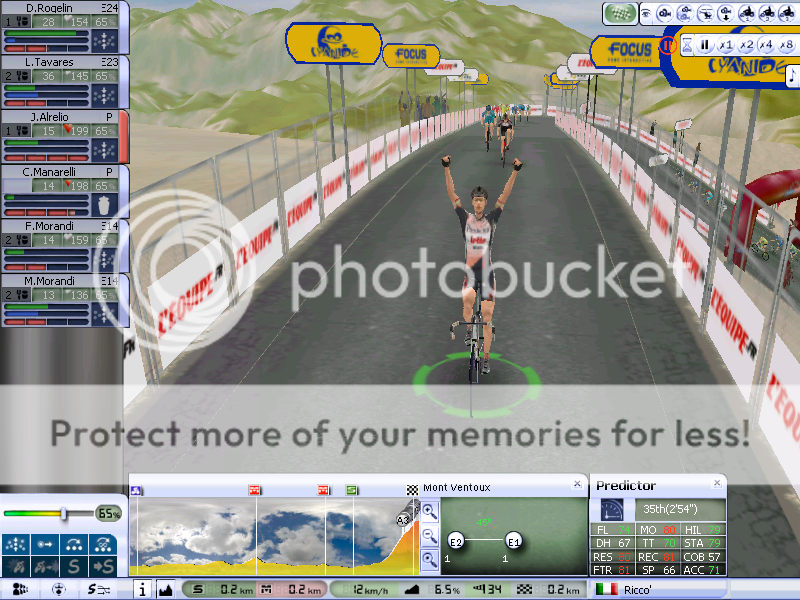
The race now hit the mountains for the first time and it was a great initial offering iwth a finish on top of Ventoux:
While there was no early breakaway for this stage, a couple of strong groups did get away in the middle of the stage as race leader Savoldelli crashed. This meant that no one was willing to push the pace as he got back... until Cunego launched an attack! He got away in a small group, forcing the pace to be raised. He was caught before the Ventoux started, however.
Lots of riders tried to force a gap on the Ventoux and eventually it was Ricco who created a gap, with a group of Gadret, Moreau and Beltran behind him. The rest of the favourites were not too far back, and Savoldelli was dropped, meaning that he would lose his jersey today.
Gadret forced his way away from first Beltran and then Moreau but he couldn’t catch the Italian, who went on to take the stage win. Schleck, Valverde and Cunego dropped the rest of the favourites, gaining between 30 seconds and a minute on them.
This put Moreau in the leader’s jersey, 49” up on Leipheimer and 51” on Dekker, who lost some time on the other favourites today. Ricco was only 54” back and clearly in good form.
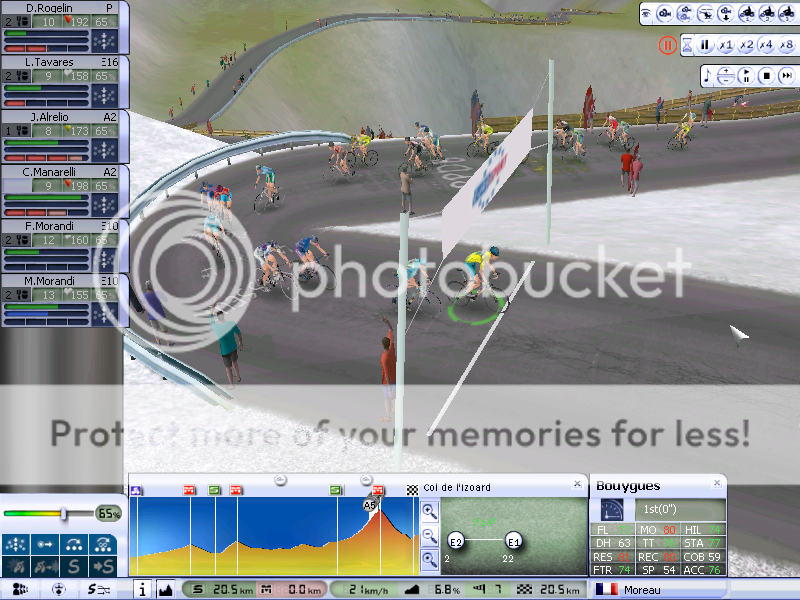
The next stage brought in another tough climb – the Col de l’Izorad, this time though the stage finished on a descent. The climb did not prove particularly selective as 22 riders went over the top together, despite attacks from Samuel Sanchez.
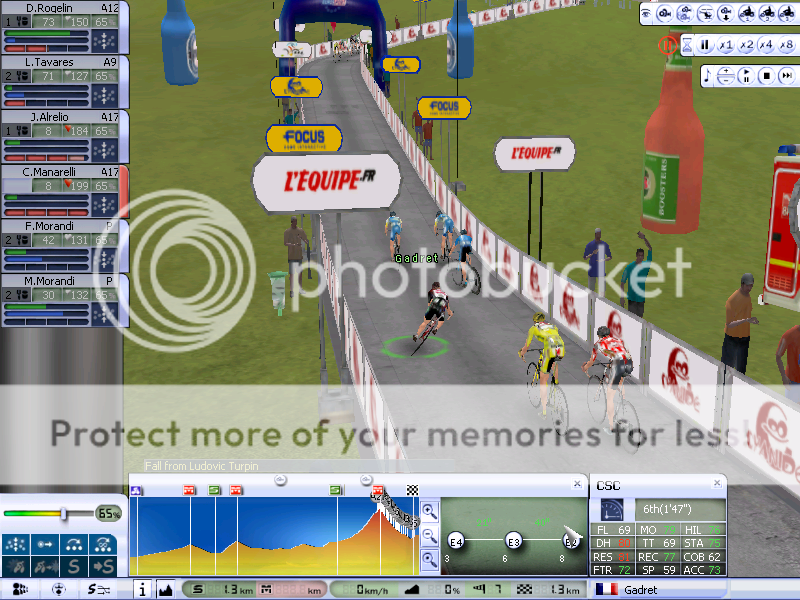
The climb may not have been but the descent proved selective. 6 riders got a gap on the others – Cunego and Dekker were the biggest names in that group. Meanwhile, behind, several favourites crashed on the run-in:
Gadret, Leipheimer, Ricco and Contador all went down in this crash! They wouldn’t have been able to catch the front 6 anyway, who went on to contest the stage (won by José Enrique Gutiérrez Cataluña). This did result in these 4 all losing 4 minutes to the winners. This resulted in the overall being completely re-written – Dekker took over the leader’s jersey with Moreau 39” back. The stage winner Gutiérrez Cataluña was 1’28” behind in third with Valverde 1’55” down and Cunego catching up into 5th 1’56” off the pace.
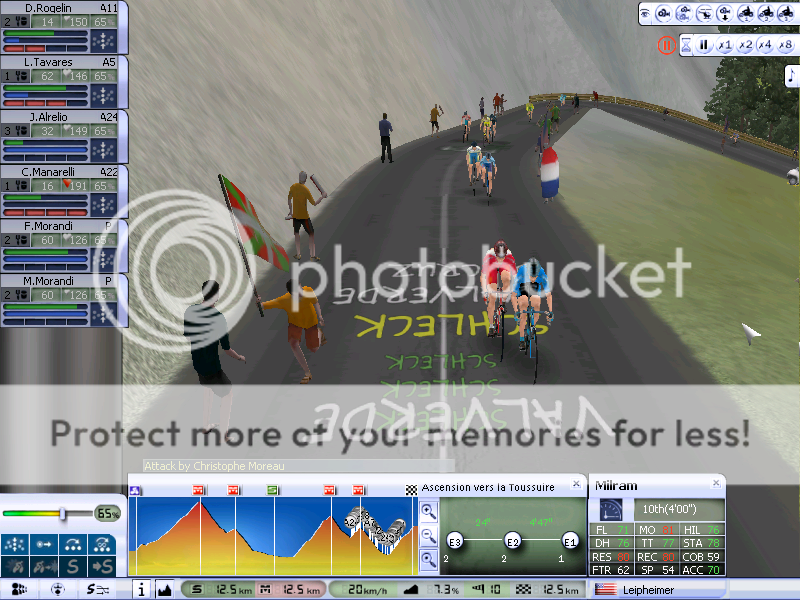
The next stage was probably the toughest in the race, including a climb up the Galibier and then a finish on top of La Toussier:
Gadret went on a brave solo attack at the start of the stage and by the time he had finished the Galibier his lead was already at 20 minutes. The peloton realised that they had to chase this and thus the race was absolutely shredded, with only 36 riders left in the leading bunch at this point. Not only that but by the time the race reached the final climb the main bunch was down to just 8 riders - Gil, Schleck, Cunego, Valverde, Moreau, Dekker, Contador and Leipheimer. They started the climb only about 5 minutes behind the Frenchman.
It was Leipheimer and Valverde who lit the touchpaper, putting in a big attack that broke up the favourites.
Contador and Cunego were just behind them, with Schleck, Moreau and Perez Sanchez (who came from nowhere!) in the next group and finally the leader Dekker with Gil behind them. Remember that Dekker was the race leader and couldn’t afford to drop any unnecessary time. Dekker’s group caught up to the group of Schleck but more importantly Leipheimer got away from Valverde... only to crack and drop back to Cunego’s group.
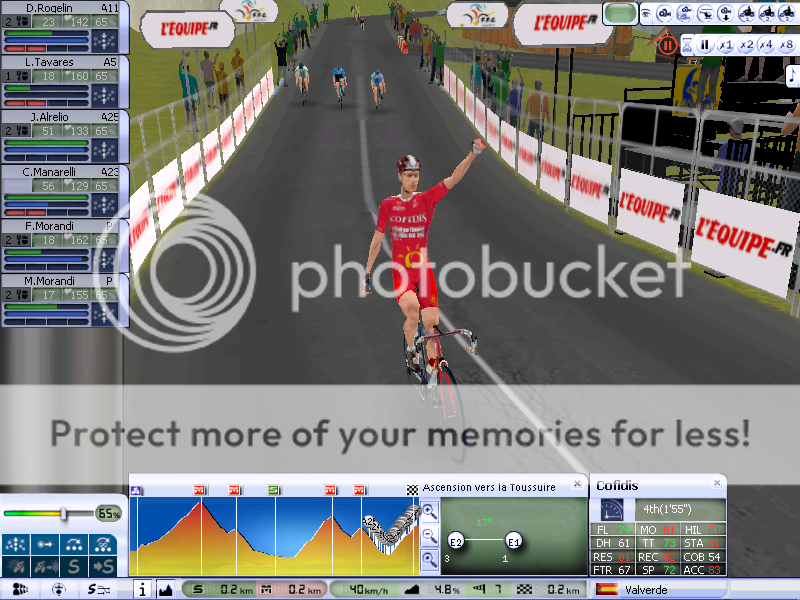
Up front, with only 2.4km to go, Valverde tragically caught up to Gadret and passed him. It would have been a heroic effort if the Frenchman had stayed away. Nevertheless, Valverde managed to hold off the others and he took a well-earned stage victory.
Cunego, Leipheimer and Contador were only 15” behind him with the rest of the favourites (and Gadret) another 31” down. This meant that Dekker had done enough to hold on to his leader’s jersey and was still the race leader! Moreau was second with Valverde moving into third after his win on this stage. Cunego somehow had moved himself up to fourth overall.
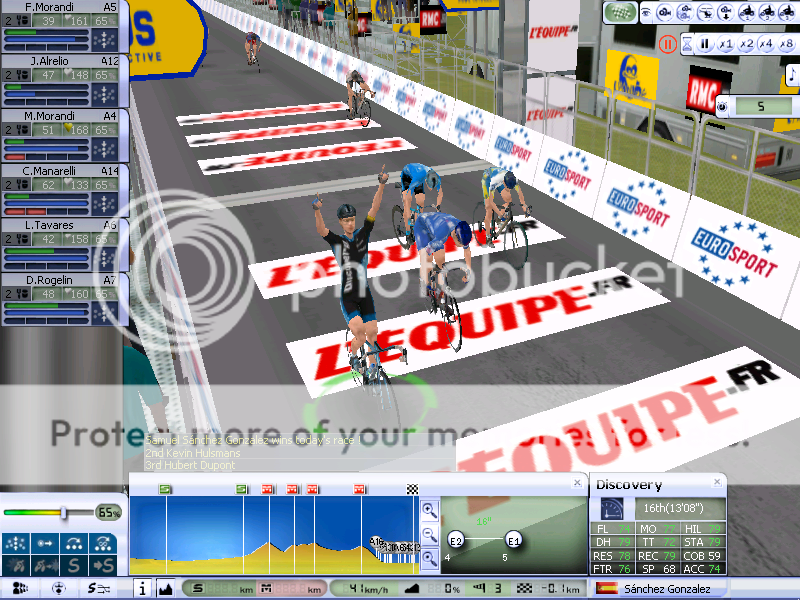
The final stage was bumpy and after all of hte climbing it was unsurprising that a break took the stage win. Samuel Sanchez was in the group and managed to outsprint the others.
I guess I like this race because it shows that consistent riding, even if you are losing a bit of time occasionally, can still bring in the big results. Dekker never really set the race alight. Not only that, but there were some fantastic moments, such as Gadret’s individual attack (and in fact that stage as a whole).
I like the Efficiancy ranking. It's something different and interesting. I think that the PCT and CT rankings would be more interesting given the greater diversity of teams and leaders. I'd happily read more of them!
Nice look at the disbanding teams. I could have written a whole issue of The Sound on them but you do it better. My interest was on Dombrowski, where the fight is going to be HHUUGGEE!!! It could break a Man-Game record for wages if enough teams target him.
Dramatic race from 2007! I know bits of the 2012 season but almost nothing before then, so these historical races are fascinating reads. Interesting how some riders are still kicking ass 6-7 years later
Excellent work Count, but one complaint - you're doing everyone's homework for those too lazy to do it for themselves!
Keep up the great work, looking forward to the further analysis (and to see if agrees with the conclusions I've already reached or not).
Edited by Scorchio on 23-02-2014 12:57
TheManxMissile wrote:
[...]
It could break a Man-Game record for wages if enough teams target him.
[...]
Do you really think Dombrowski could beat 1.3m?
I doubt it. Even Bakelandts will not reach it. Unless one of the managers is more insane than me getting Cunego for 1.3m last season.
Team Bianchi - 2012 Man-Game ProContinental Tour Champions
TheManxMissile wrote:
[...]
It could break a Man-Game record for wages if enough teams target him.
[...]
Do you really think Dombrowski could beat 1.3m?
I doubt it. Even Bakelandts will not reach it. Unless one of the managers is more insane than me getting Cunego for 1.3m last season.
Maybe not but he'll be pushing 1million i think considering his development from last season and that he will win a GT or several in the future
I agree with Rin. 666,000 was an insane amount of money to spend on Dombrowski as a neo-pro and one was one of the reasons why WWE were utter shyte for most of the year.
Any team forking out more than that this season is risking what I would call the Puma-SAP effect a desperate race against relegation.
Did enjoy the first part and final part the most. The middle section is good, but really everyone needs to wait for the post renewals database before making too serious a plans - then need to rethink again on the onset of transfers I think!
A couple of observations on the first section:
- Boonan is the highest free agent at 19th. I will be interested to see how this works out in the PCT and the CT. I have always felt that you can get better deals on the player to player transfer market.
- MvStayen was absolutely brilliant for us.
- I think Guerao's high ratio is quite largely offset by the amount of training money spent on him. He also had a fantastic Tour de France. He is a bit of an outlier.
Finally a brilliant race to review, certainly a tremendous Dauphine. In some ways the smaller stage races in the mangame can be more interesting than the GTs'. This is certainly the case in the PCT in general - I recall in one season the Tour de France had a far weaker field than a shorter Tour of Austria.
On the Dombrowski topic, I'd expect about 700 to 800k this year. However I'd expect only really to see Machado, Trofimov, Bakelants and Ginanni to near 1 million.
Smowz wrote:
I agree with Rin. 666,000 was an insane amount of money to spend on Dombrowski as a neo-pro and one was one of the reasons why WWE were utter shyte for most of the year.
Any team forking out more than that this season is risking what I would call the Puma-SAP effect a desperate race against relegation.
You mean the onetime (and really close) race against relegation to never fear transfer season again afterwards because all important riders are homegrown?
mb2612 wrote:
Excellent summary, selling Guerao to invest in Madrazo clearly wasn't a move that paid off points-wise.
True, but spending 3,2mio, and this season 1,8 or so more is also a heavy cost to make him a top level rider. Without those 3,2mio spent he would've hardly reached half that amount of points. He basically only scored better than 12-15th when he was among the top 3 favorites, and he wouldn't have been that at all without the training.
I agree that points/wage efficiency is an extremely important metric in this game. Looking forward to the PCT/CT numbers. Also curious whether someone will beat Nardin's 96.6 points / 10k wage.
FroomeDog99 wrote:
Thanks for another one of these Count. The efficiency is interesting, looking forward to the CT rankings. Guerao really did well this season.
Ben Nasser is mine by the way. Going all out to get him in the transfer season!
You are not alone mate.
Great read Count Arach, especially the PT point scoring breakdown, very interesting. Edited by Avin Wargunnson on 24-02-2014 06:28
First time reading the blog. Great work and a great read! Thanks for another great addition, Count. I'm quite in the dark as to what early seasons of MG were like, but this look-back feature is awesome. It's also nice to see how MG has evolved over the years